
Patient story
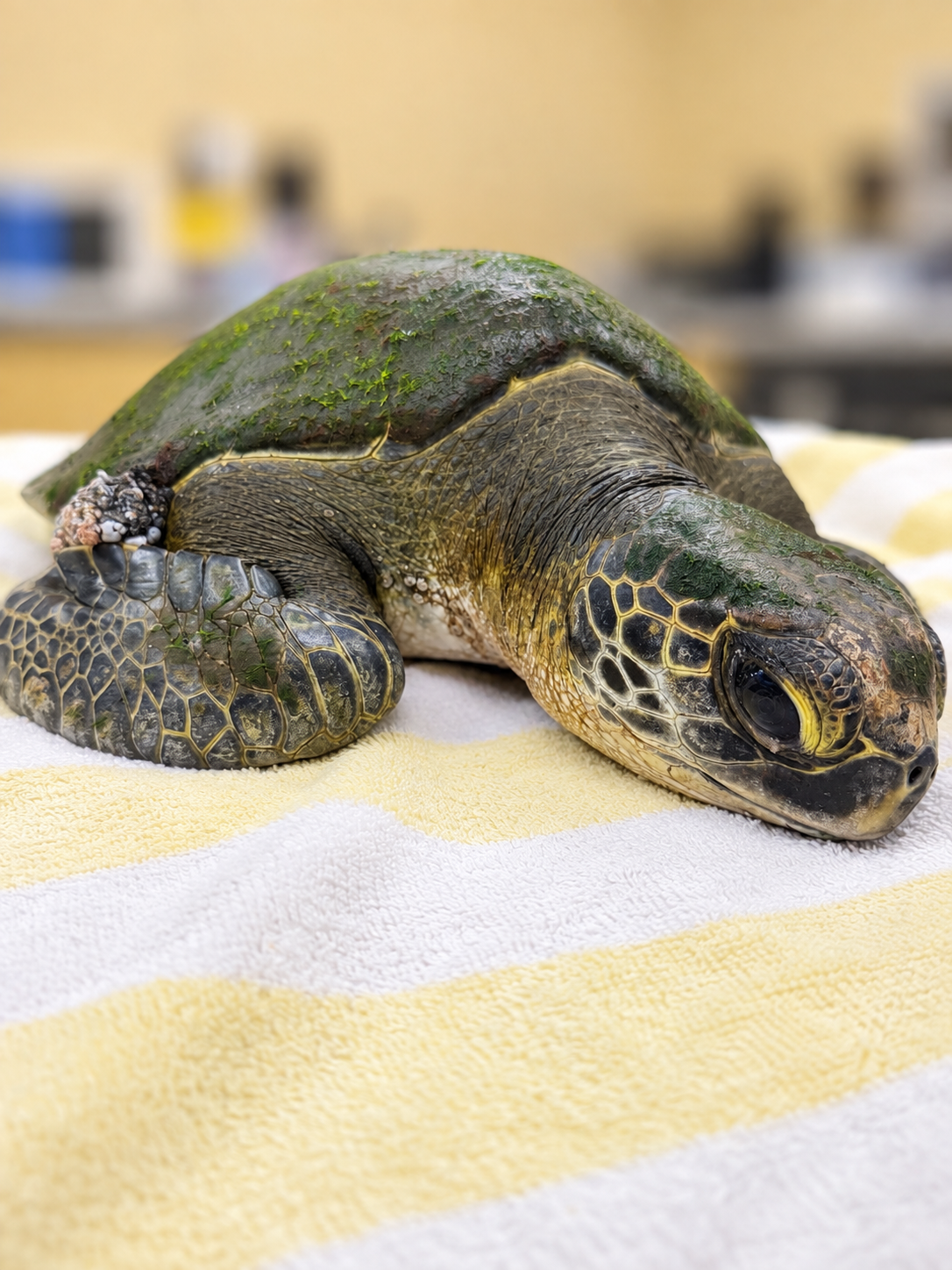
Meet Ellie
Discover how your support helps turtles like Ellie return home.

Patient Info
SPECIES
Green Sea Turtle
aGE
5-10 Years
wEIGHT
12 Lbs
DATE ARRIVED
09/05/2026
ISSUE
Buoyancy / Hook Ingestion
the story
About Ellie
Ellie was found in the Intracoastal Waterway repeatedly attempting to dive, but each time popping right back to the surface like a buoy. A family watching nearby recognized that something was wrong and contacted the Florida Fish and Wildlife Conservation Commission (FWC) for help. With permission from FWC, the family carefully used a net to bring Ellie safely out of the water and Ellie was transported to Sea Turtle Specialists for emergency care.
Rescue
Ellie is one very lucky little turtle! This rescue is a great example of why we work to educate our community about sea turtles and what to do when one may be in trouble. Here in South Florida, we share our beaches and waterways with large numbers of sea turtles year-round, and an observant and informed community can make all the difference. Ellie’s rescue team did an amazing job recognizing something was wrong, contacting FWC, and following instructions to get Ellie safely into care.

Diagnose
Upon intake, our veterinary team immediately discovered several fibropapillomatosis (FP) tumors on Ellie’s skin and eyelids. Initial bloodwork revealed a nutritional imbalance as well as evidence of significant muscle overuse, likely from Ellie’s continual attempts to dive to the bottom in search of seagrass and other food. Radiographs revealed the underlying problem: a J-hook lodged deep within Ellie’s esophagus. The hook and attached fishing line had created a blockage that prevented Ellie from swallowing normally, causing vegetation already within the digestive tract to become stagnant and ferment. The resulting buildup of intestinal gas caused Ellie’s abnormal buoyancy, explaining why every attempt to dive ended with Ellie popping right back to the surface.

Care
Ellie underwent surgery to remove the hook soon after arrival. The procedure was successful, but a portion of the attached fishing line had already traveled farther into the gastrointestinal tract and remains inside. Our team will closely monitor Ellie while we work to restart normal gut function and establish a stable, healthy diet, allowing the remaining line to pass naturally. Ellie began eating soft foods shortly after surgery, which is an encouraging sign and gives us a guarded prognosis for recovery. Ellie will remain in our care while we correct the nutritional deficits and perform laser surgery to remove the FP tumors.

Fun Fact
This is the hook removed from Ellie’s esophagus. While metal hooks are easily visible on radiographs, monofilament fishing line is not. After carefully locating the hook for removal, we had no way of knowing whether any fishing line was still attached. As the tip of the hook emerged, line slowly began to appear—and then more line, and more line! To our surprise, this single small hook had eight separate fishing lines attached to it. This is a very unusual setup compared with what we typically see, so we can only wonder what its intended purpose may have been.
Symbolically Adopt A Patient
Before release, our patients need extensive care. Your adoption helps cover the costs of medication, food, and rehabilitation equipment.
*Adoptions are symbolic donations that support our mission.